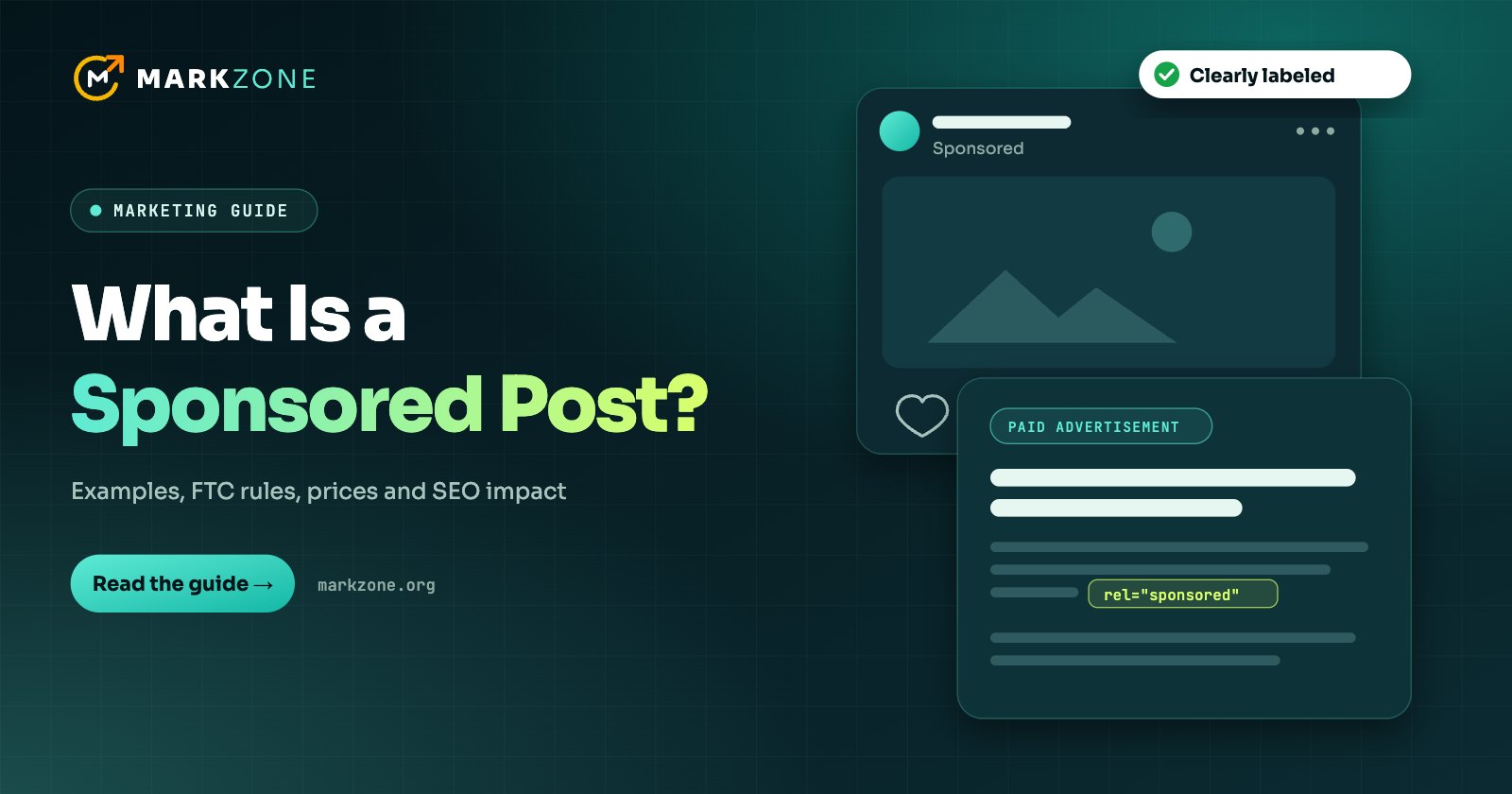
What it is. A sponsored post is content a brand pays someone else to publish: an influencer, a social platform or a website.
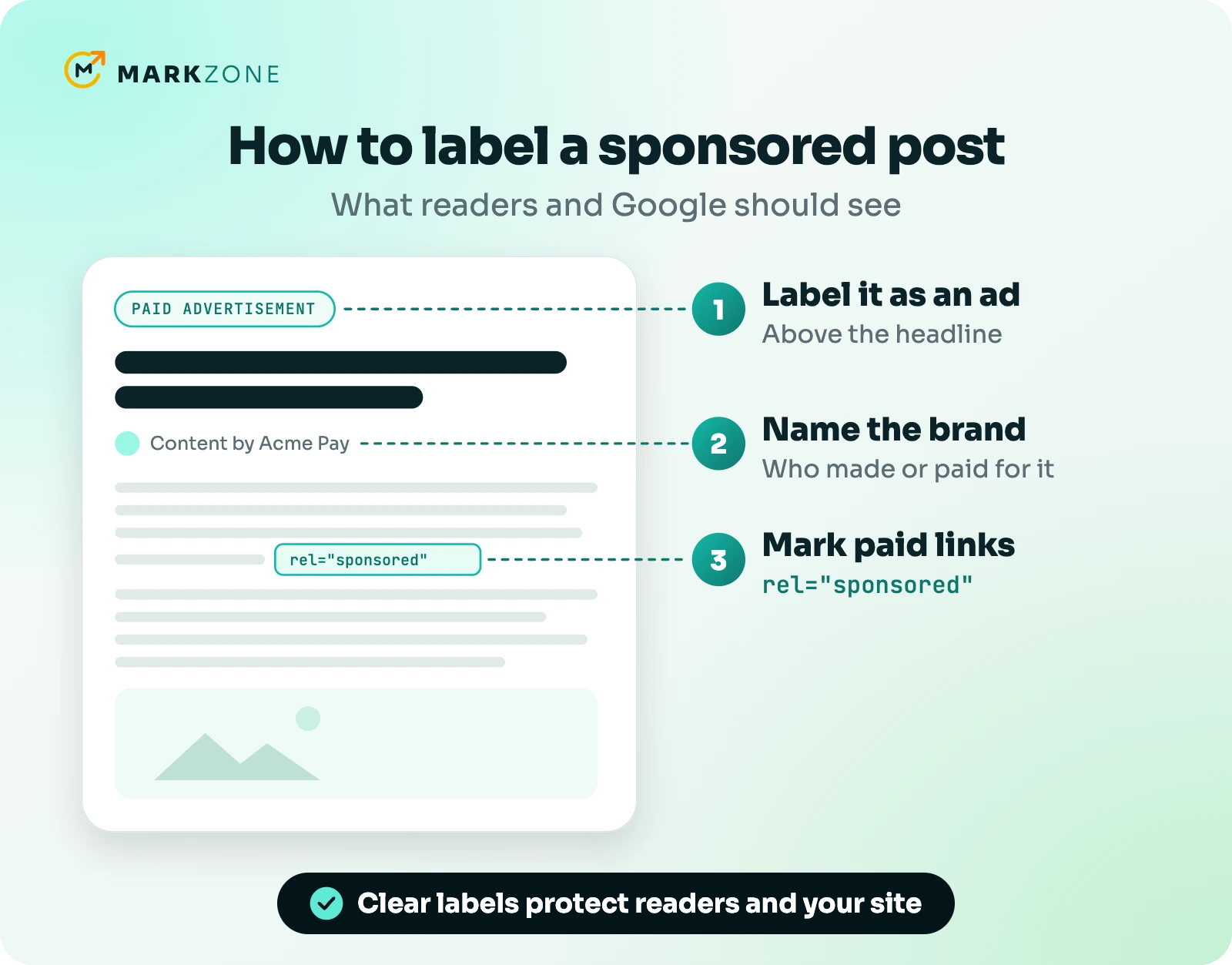
It must be labeled. The FTC expects a clear label such as “Ad” or “Sponsored”, and Google asks for paid links to be marked rel="sponsored".
Pick it for reach, not rankings. Sponsored posts on news sites are best for brand awareness and PR. For rankings, our clients usually choose regular guest posts.
A sponsored post is a piece of content that a brand pays someone else to publish. It can be an influencer’s Instagram post, a promoted post on LinkedIn or Facebook, or an article on a blog or news site. Because the brand paid for it, it must be clearly labeled as advertising, with words like “Ad” or “Sponsored”, so readers know what they are looking at.
Sponsored posts on publisher websites are part of what we sell, so this guide gives them extra attention. The disclosure rules below come straight from the FTC’s and Google’s own documents.
Types of sponsored posts
The word “sponsored” shows up in three very different places. What they share is that someone paid for the content to appear.
| Who you pay | How it is labeled | |
|---|---|---|
| Influencer post | A creator on Instagram, TikTok or YouTube, with money or free products | “Ad” or “Sponsored” in the post, often with a “Paid partnership” tag |
| Promoted social post | The platform, such as LinkedIn or Facebook, to show your post to more people | The platform adds “Sponsored” or “Promoted” above the post |
| Sponsored article | A blog or news site that publishes your article | A label above the headline, and paid links marked as sponsored |
Sponsored post examples
- Influencer: a fitness creator posts a workout video using a supplement brand’s product and adds “Ad” to the caption, because the brand paid for the post.
- Social platform: a software company pays LinkedIn to show its guide to marketing managers. The post appears in their feeds with a “Promoted” label.
- Website: a payments company pays a finance blog to publish its article about cutting card fees. The article sits under an “Ad” label and links to the company’s site.
Sponsored content, paid posts, branded content and, on websites, native advertising or advertorials.
Sponsored post vs guest post
On websites, people often mix up sponsored posts and guest posts. Both put your article on someone else’s site, but they are bought for different reasons.
| Sponsored post | Guest post | |
|---|---|---|
| Main goal | Brand awareness and PR | Relevant links and new readers |
| Label | Clearly marked as paid content | Usually shown as a normal article with an author |
| Typical sites | News and media sites with a large audience | Niche blogs and industry sites |
| Price | Higher: about 50% more than a normal post on the same site | Lower on most sites |
In our orders, the choice comes down to the goal. Clients who want better rankings usually pick non-sponsored guest posts with a dofollow link, which cost less. Clients who want brand awareness or PR pick sponsored posts on news sites, which cost more. If a normal post on a site costs $100, the sponsored version is usually around $150. One of our recent sponsored posts, for example, was a trading company’s article about US100 and S&P 500 volatility on Punch, one of Nigeria’s largest newspapers. One rule applies to both: if you paid for a link, Google wants it marked as paid (more on that below). For the guest post side, see our guide to guest posting for SEO.
Sponsored post rules: FTC and Google
Two sets of rules matter. The FTC covers what readers must be told, and Google covers how paid links should be marked.
What the FTC expects
- A label people can’t miss. The FTC’s guide to native advertising says disclosures must be “clear and prominent” and should sit in front of or above the headline.
- Plain words. The same guide lists “Ad”, “Advertisement”, “Paid Advertisement” and “Sponsored Advertising Content” as terms people are likely to understand. It calls “Promoted” “at best ambiguous” and warns that “Sponsored by [X]” may be read as the sponsor funding the content without creating it.
- Influencers disclose every paid relationship. In its Disclosures 101 for social media influencers, the FTC says to disclose any financial, employment, personal or family relationship with a brand, including free products. “Ad” and “sponsored” are fine, but vague tags like “sp” or “collab” are not. A platform’s own disclosure tool may not be enough on its own.
What Google expects
Google asks site owners to mark paid links with rel="sponsored" (or rel="nofollow"). Its spam policies treat “buying or selling links for ranking purposes” as link spam, and say such links are not a violation when they are marked this way.
rel="sponsored".How much does a sponsored post cost?
- Promoted social posts: you set a budget, and the platform’s ad auction decides what you pay to reach your audience.
- Influencer posts: creators set their own rates, mostly based on audience size, engagement and how much work the post needs.
- Sponsored articles: the price depends on the site’s authority and traffic. On the sites we work with, prices start at about $20, and many of our clients choose sites in the $200–300 range. Well-known news sites cost more, and our clients who want them usually buy for PR rather than rankings. In our catalog, sites that label posts as sponsored typically cost about 4 to 12 times more than similar-DR sites that don’t. That is because most of them are large news and media brands. On the same site, the sponsored version of a post usually costs only about 50% more than a normal one.
For outside numbers on website placements, BuzzStream’s 2026 data puts the average guest post at $295 bought directly from the publisher. Through vendors it is $461. TheWebsiteFlip’s review of six marketplaces put the median at $216.96 per link. We break down where those gaps come from in our backlink marketplace guide. For prices by DR and traffic, see link building pricing.
Do sponsored posts help SEO?
Not directly. A link marked rel="sponsored" tells Google the link was paid for, so it is not meant to pass ranking credit. The value of a sponsored post is the audience. People read the article and visit your site. Some search for your brand later, or trust you more because they saw you on a known site.
That is why we treat the two products differently. If rankings are the goal, a relevant guest post is the better fit. If reach and credibility are the goal, a sponsored post on a big news site is worth the higher price. If you plan to contact sites yourself, ask each one whether its links are dofollow or marked sponsored, as we explain in our guest posting outreach guide.
One caution: Google’s rule covers paid guest posts too, so a paid link should be marked even when the post is not labeled as sponsored. In practice many paid guest posts are still sold as dofollow links, and that risk sits with the buyer. We explain how to keep it low in our backlink marketplace guide.
Are sponsored posts worth it?
They are worth it when the audience matches your customers and the post is clearly labeled. Before you pay, check:
- Audience fit: does the site or creator reach the people you sell to?
- Real reach: look at steady traffic for a website and real engagement for a creator, not follower counts alone.
- Labeling: will the post carry a clear label and, on websites, mark paid links as sponsored?
- Proof: will you get the live link and a short report? Here is what ours looks like: sample report.
Our catalog includes news sites and niche blogs, with DR, Ahrefs traffic and price listed for most.
Frequently asked questions
What does “sponsored” mean on a post?
It means a brand paid for the post. On social media, the platform or the creator adds the label. On websites, the publisher adds it, usually above the headline.
Can you give me an example of a sponsored post?
A fitness creator who is paid to show a supplement brand in a video and adds “Ad” to the caption is one example. A finance blog that publishes a payments company’s article under an “Ad” label is another.
How much do you pay for a sponsored post on Facebook?
You set the budget. Facebook’s ad auction then decides what each view or click costs, based on your audience, your goal and how many other advertisers want the same people.
What is the difference between a sponsored post and a guest post?
A sponsored post is paid content that is labeled as an ad, usually bought for brand awareness. A guest post is an article on a relevant site, usually bought for links and new readers.
Do sponsored posts help SEO?
Not directly, because paid links should be marked rel="sponsored" and are not meant to pass ranking credit. They help through readers, brand searches and trust.
Do sponsored posts have to be labeled?
Yes. The FTC expects a clear, prominent label such as “Ad” or “Sponsored”, and Google asks for paid links to be marked rel="sponsored" or rel="nofollow".
Want a sponsored post on the right site?
Tell us your goal, whether that’s links, traffic or brand mentions, and we’ll suggest sites that fit.

Muhammad Suleman is the founder of Markzone. He has done guest posting and link building since 2018 and has worked with hundreds of clients. Today his team handles 300–400 orders a month for brands and SEO agencies, with publisher sites in every major niche. He leads outreach, site checks and reporting, and writes about link building from his daily work with publishers and clients.